iOS + Android apps
React Native or Flutter with native modules for camera, Bluetooth and biometrics where it counts.
Native-feel iOS and Android apps with offline-first sync, push notifications, Bluetooth, payments and app store submission handled end-to-end.
Typical timeline: 6 – 16 weeks. Engagement: fixed scope or milestone-based.
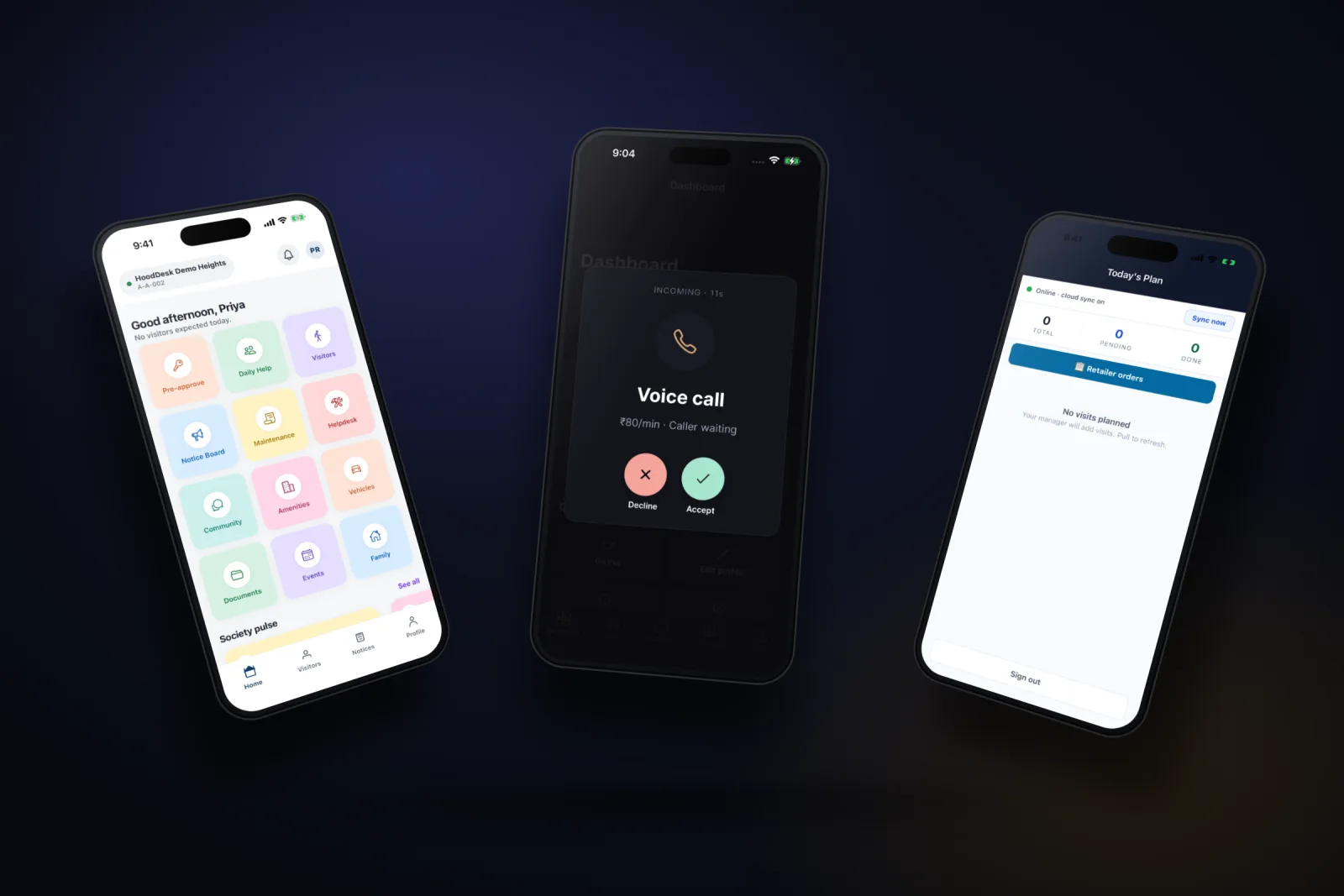
Built with native modules where they matter and shared logic where they do not.
React Native or Flutter with native modules for camera, Bluetooth and biometrics where it counts.
FCM + APNs, rich payloads, deep links, scheduling and per-user channels with delivery analytics.
WatermelonDB or SQLite with conflict resolution so the app works in low-connectivity environments.
TestFlight, internal track, screenshots, listing copy, review responses — we own the submission.
Sentry / Crashlytics + Firebase Performance, with release-health dashboards and on-call alerting.
Bridge into Swift / Kotlin for SDKs that do not have RN / Flutter bindings — printers, scanners, IoT.
Consumer, internal-ops and marketplace apps fail for different reasons — so the UX, auth model and release cadence change while the engineering discipline stays the same.
Every session is optional, so the UX has to earn it: fast onboarding, polished motion and empty states that guide instead of confuse. Auth is low-friction — OTP, social sign-in and biometrics. Releases ship frequently, with over-the-air updates and staged rollouts so a bad build never reaches your whole user base.
Field staff and back-office teams need dense, task-first screens, offline capture and one-hand operation — not marketing polish. Auth follows your organisation: SSO, role-based access and device-level controls. Releases run on a scheduled cadence with enterprise or internal-track distribution, so training and rollout stay in sync.
Two or more audiences — customer, provider, admin — share one platform but need distinct interfaces built on a shared core. Auth adds per-role verification and KYC where money moves. Releases are coordinated across every app in the fleet, because a customer-side change that breaks the provider app breaks the business.
We scope and staff each layer explicitly, so nothing is discovered mid-build.
React Native, Flutter or native Swift / Kotlin UI — navigation, animation, gestures, accessibility and the state layer that keeps screens honest.
APIs, authentication and session handling, background queues, push delivery and third-party integrations — payments, maps, messaging, analytics.
Databases and data models, file and media storage, infrastructure, observability and the sync engine behind offline-first behaviour.
Every capability below is wired into apps shipping today — not a marketing list.
Foreground service + Doze-aware ping so users stay online without battery drain.
Mapbox / Google integration with offline tile caching for low-signal zones.
WebSocket-pushed metrics with delta colour-coding and tap-through drill-downs.
Victory / React Native Skia for 60fps charts even on entry-level Android.
Sub-300ms perceived load with native splash, prefetch and skeleton screens.
SQLite + sync queue keeps orders, history and cart usable on flaky 2G.
UPI / bank transfer with daily settlement, in-app wallet and tax-ready reports.
Tabs, KPIs and actions shown / hidden by role at compile time.
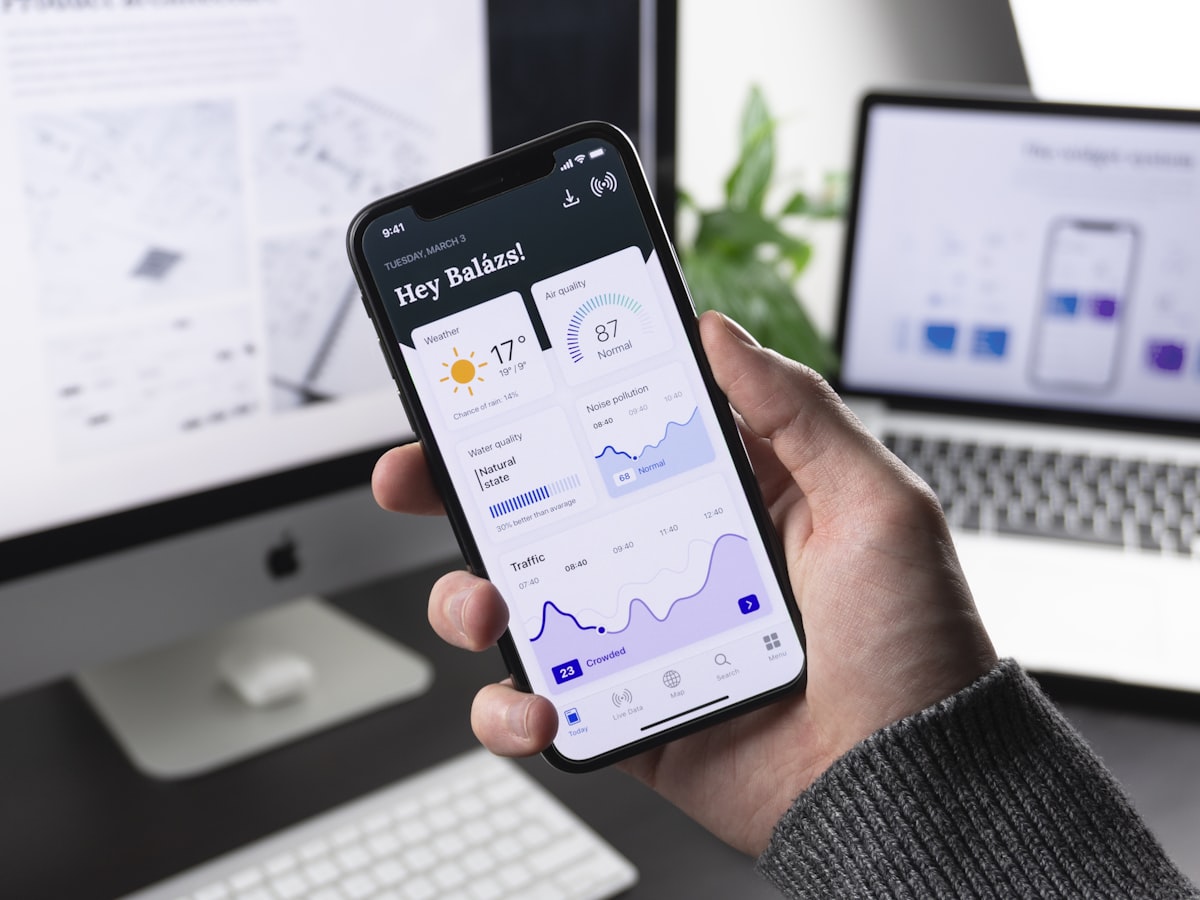
Every release candidate is exercised on physical iPhones and Android handsets before it ships.
Device lab QA. Builds are verified on real iOS and Android hardware across screen sizes, OS versions and low-network conditions.
Store submission handled. App Store and Google Play listings, review cycles and release management are part of the engagement — not an extra.
One codebase, native feel. React Native or Flutter architecture validated against your roadmap, with native modules where performance demands it.
A predictable path from brief to launch — with documented hand-offs at every milestone.
Goals, users, constraints, success metrics — locked in writing.
User journeys, wireframes, hi-fi UI, prototype, design system.
Sprint cadence, weekly demos, code review, automated tests.
Staging UAT, security review, CI/CD, monitored go-live.
SLA support, observability, feature roadmap, optimisation.
A representative customer experience — every dot is a real capability we ship in production apps.
Locale, time-of-day and ML-ranked recommendations on the home feed.
Tap a dot on the phone — or tab to it with your keyboard — to explore each capability. Every feature shown ships in production builds.
From CI/CD to over-the-air updates and store automation.
For most product apps, React Native or Flutter ship 30-50% faster with no UX penalty. If you need heavy native UI or low-level platform APIs (AR, ML inference, audio DSP), we go native. We pick after a 1-day technical discovery.
Yes. We submit, respond to reviewers, and resubmit on rejections. Most apps clear review in the first attempt because of pre-submission audits.
Yes. Offline-first is our default for field-staff and retail apps — with a sync engine, conflict resolution and a visible sync status indicator.
Yes — CodePush, EAS Update or Expo Updates for JS bundle updates without a store review. Native changes still go through the store.
Build flavours / schemes per tenant, automated builds in EAS or Fastlane, separate bundle IDs and signing — everything you need to ship 10 white-label apps from one repo.
Tell us about the project. We will reply within one business day with a proposal and timeline.